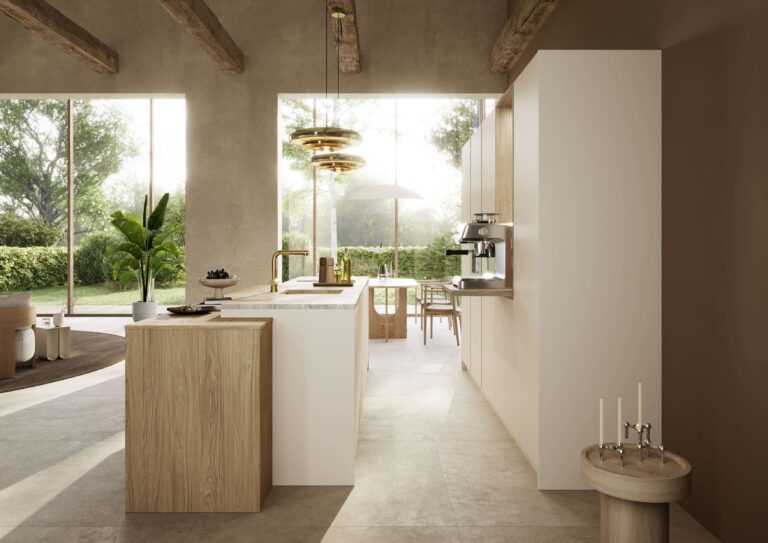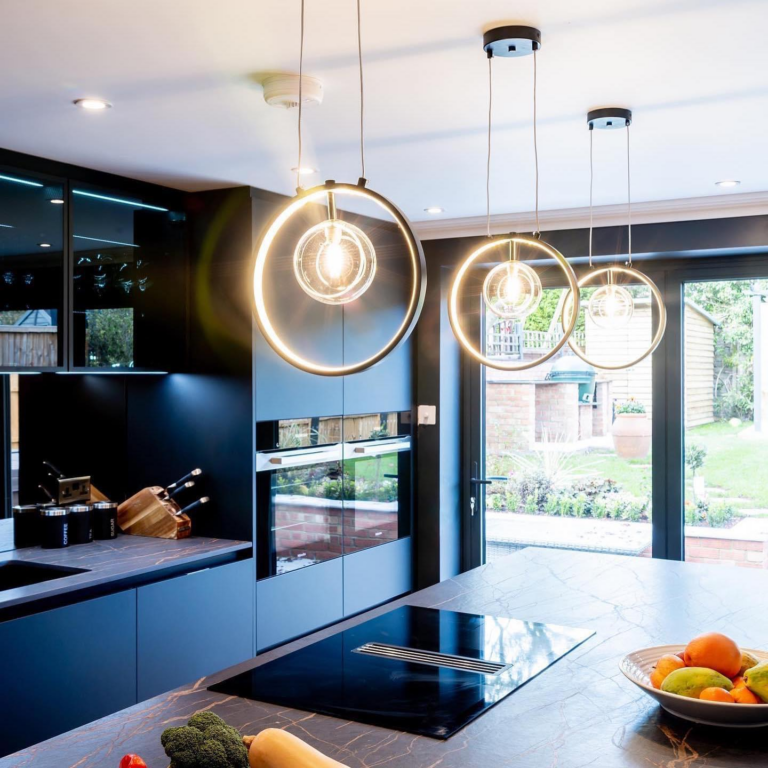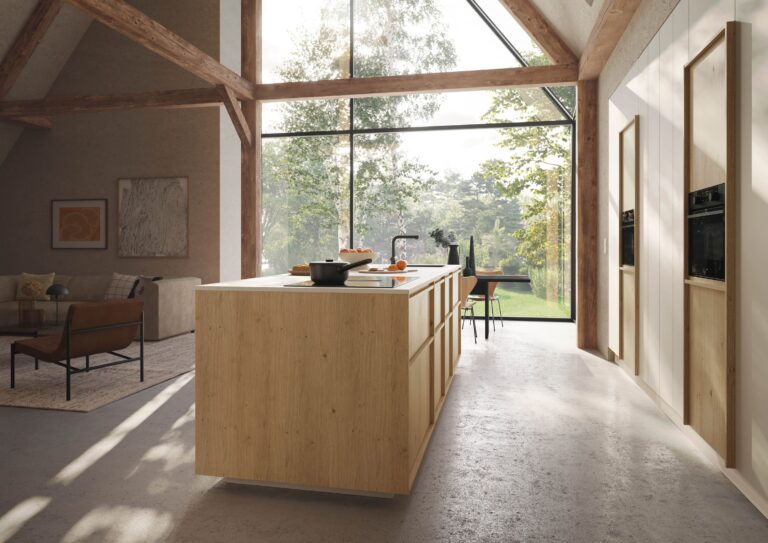
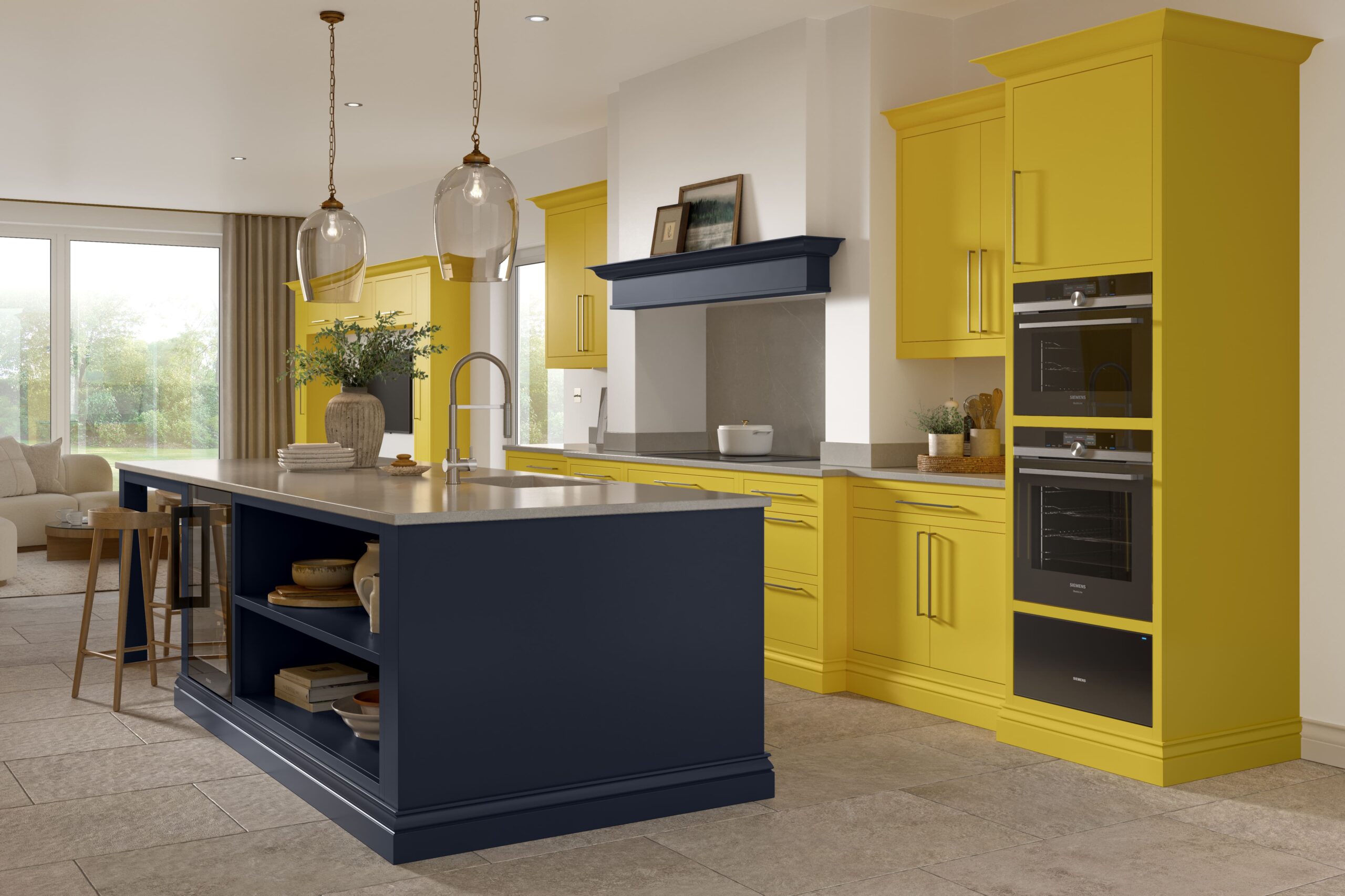
Germany has been the world benchmark for kitchen manufacturing for decades, and for reasons that go well beyond marketing. The precision engineering, material quality, tolerance standards and functional design thinking that characterise the best German kitchen manufacturers are genuinely distinct, and they translate directly into kitchens that work better, last longer and feel more considered in daily use.
At Zen Küchen, German kitchen manufacturing is at the heart of what we offer. We work with Rotpunkt, one of Germany’s most respected kitchen manufacturers, to bring the full benefit of that engineering heritage to homes across Richmond and West London. This guide explains what German kitchen engineering actually means in practice, and why it matters when you are making a significant investment in your home.
Precision Manufacturing and Tight Tolerances
The Difference You Can See and Feel
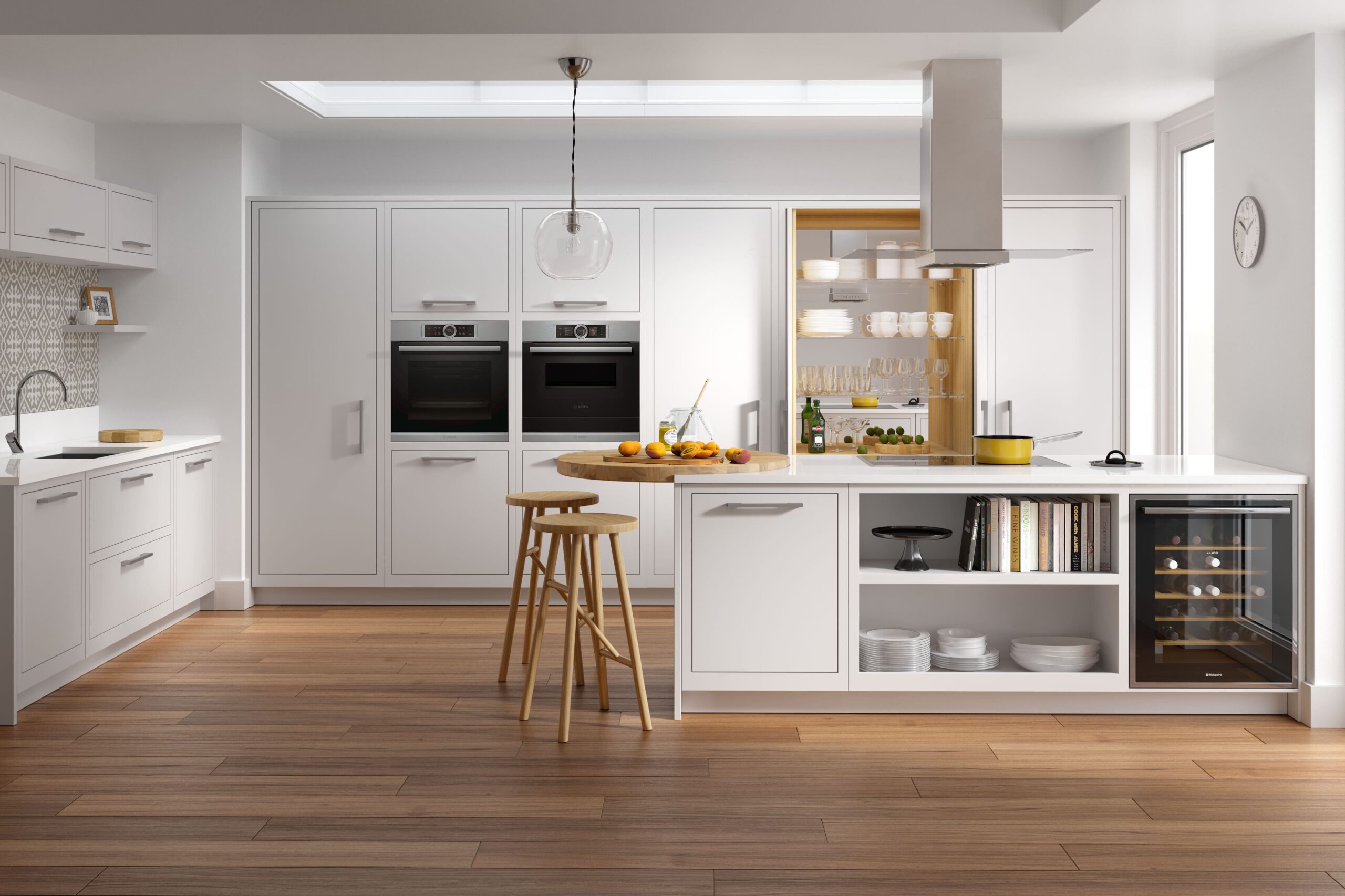
The most immediately apparent quality of a well-made German kitchen is the precision of its construction. Doors align perfectly. Drawers close with a smooth, consistent action. Gaps between units are even and controlled. This level of precision is not accidental — it is the product of manufacturing processes that hold extremely tight dimensional tolerances, combined with quality control systems that would be considered exceptional in any industry.
In practical terms, this means that a German-manufactured kitchen installs more cleanly, looks more resolved once in place, and continues to look and perform well for many years after installation. The cumulative effect of slightly imprecise manufacturing, doors that drift out of alignment, drawers that develop a catch, joints that open fractionally over time, is something that becomes very apparent in lower-quality kitchens within a few years of installation. In a well-made German kitchen, these issues simply do not arise.
Drawer and Hardware Systems
The Heart of a Functional Kitchen
The drawer is where German kitchen engineering has arguably made its most significant contribution to how kitchens actually function. German manufacturers, and the hardware specialists they work with, principally Hettich and Blum, have developed drawer systems that operate with a fluency and precision that sets them apart from anything produced at a comparable price point elsewhere.
Full-extension drawers that open smoothly to their full depth, soft-close mechanisms that prevent slamming regardless of how firmly the drawer is pushed, and self-closing systems that draw the drawer in from a few centimetres short of closed, these are not features found only at the very top of the market. They are the standard in quality German kitchen manufacturing, and they make a noticeable difference to how the kitchen feels in daily use.
This hardware quality is equally relevant whether you are designing a classic kitchen with deep painted drawer fronts or a modern kitchen with handleless push-to-open configurations. The mechanism behind the door is the same, and it matters just as much.
Material Quality and Substrate Construction
Built to Last in a Demanding Environment
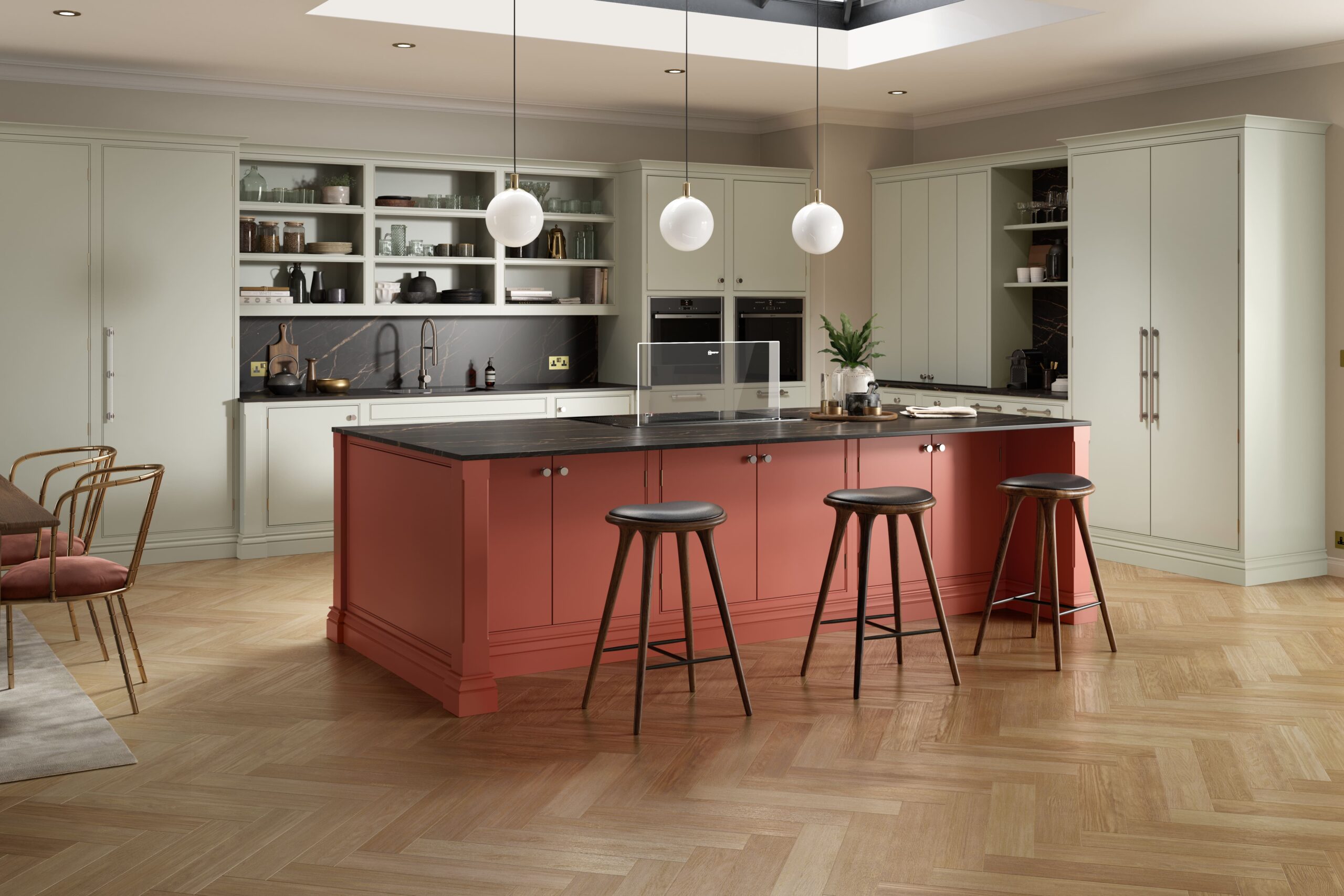
A kitchen operates in one of the most demanding domestic environments there is: fluctuating temperatures and humidity, regular contact with water, grease and cleaning products, and the physical wear of daily use across two or three decades. The materials used in the carcass construction, the box that every door and drawer attaches to, determine how well the kitchen holds up to all of this over time.
German kitchen manufacturers use high-density, moisture-resistant board substrates with precisely engineered edge treatments that prevent moisture ingress at the most vulnerable points. The interior surfaces of carcasses are finished to a standard that matches the exterior, making the inside of your cabinets as well-considered as the outside, something that becomes very apparent when you open a drawer and see the quality of what is behind the door.
This material quality works in close harmony with the choice of worktop surface. As part of the wider Zenstone group, we are able to specify and supply stone worktops alongside the kitchen cabinetry, ensuring that the full complement of materials is chosen and detailed together. Our guide to choosing the right kitchen worktop for your Richmond home is a useful companion to this conversation.
Functional Design Philosophy
Form That Follows Function, Without Compromise
German kitchen design has always been shaped by a functional philosophy: the idea that a kitchen should work as well as it looks, and that these two ambitions are not in tension but mutually reinforcing. This translates into design details that are easy to overlook until you live with them, internal drawer dividers sized to specific utensils, pull-out larder systems that bring the contents of deep cupboards fully into reach, corner solutions that eliminate dead space entirely.
The storage intelligence built into a well-designed German kitchen means that everything has a place, and that place is accessible. This is the quality that homeowners consistently describe as the thing they notice most in the months after installation, not the colour of the cabinets or the pattern of the worktop, but the fact that the kitchen simply works, every single day, without friction.
To see the Rotpunkt range in person and experience German kitchen engineering first-hand, visit our Richmond showroom or browse our completed projects.
Sustainability and Responsible Manufacturing
German kitchen manufacturing has also been at the forefront of sustainable production. Rotpunkt, the manufacturer at the core of our offer at Zen Küchen, produces kitchens using responsibly sourced materials, energy-efficient production processes and rigorous environmental standards. For homeowners who want to make an investment that they can feel good about beyond its aesthetic and functional qualities, this is increasingly important.
A kitchen built to this standard is also, by definition, a kitchen that lasts. Longevity is itself one of the most sustainable choices you can make, a kitchen that remains beautiful and fully functional for twenty-five years has a fundamentally different environmental footprint to one that needs replacing after ten.
To find out more about our kitchen range and begin your design journey, email info@zenkuchen.co.uk, call 020 8332 9166, or book a showroom appointment.
Frequently Asked Questions
Why are German kitchens considered the best in the world?
German kitchen manufacturers have built their reputation on a combination of precision engineering, rigorous quality control, high-grade materials and a functional design philosophy that prioritises how the kitchen works as much as how it looks. These qualities are embedded in the manufacturing process at every level, from the tolerances held during production to the hardware systems specified as standard. The result is a kitchen that performs exceptionally well over a long lifespan.
What makes Rotpunkt kitchens different from other manufacturers?
Rotpunkt is one of Germany’s most respected kitchen manufacturers, known for its exceptional finish quality, the precision of its carcass and door construction, and its commitment to sustainable production. The brand operates at a level of quality that is genuinely distinct within the market, offering a range of finishes and configurations that allow for significant design flexibility without compromising on the engineering fundamentals that define the product.
Do German kitchens cost more than other kitchens?
At a like-for-like quality comparison, the cost difference between a well-made German kitchen and a domestic equivalent is often less significant than people expect. What you are paying for is material quality, precision manufacturing and hardware that will perform consistently for the life of the kitchen. When viewed as a cost per year of ownership over a twenty-year lifespan, a quality German kitchen represents excellent value.
How long should a quality German kitchen last?
A well-made German kitchen, properly installed and given reasonable care, should remain structurally sound and fully functional for twenty-five years or more. The elements most likely to show wear over time are the finish on heavily used door fronts and the condition of soft-close mechanisms — both of which can be addressed without replacing the kitchen. The carcass construction in quality German kitchens is built to outlast the decorative finishes by a significant margin.
Can I see Rotpunkt kitchens in person before committing to a design?
Yes. Our Richmond showroom displays a curated selection from the Rotpunkt range, allowing you to experience the finish quality, hardware and construction in person. We strongly recommend a showroom visit before finalising any design decisions — the quality of a well-made kitchen is something that photographs convey only partially, and seeing and touching the product makes a significant difference to how confident you feel in your choices.